When you spec a roll-off or hooklift tarping system, the choice often comes down to two designs: elbow arm systems like the Magnum and rack and pinion style telescoping systems.
On the surface, both cover containers. In real-world use, the differences show up fast in downtime, maintenance, and durability.
This breakdown explains where the Magnum-XD tarp system separates itself and why it consistently delivers lower cost of ownership.
The Magnum-XD Difference
| Features |  |
Pioneer Rack & Pinion RP4500SAR |
|---|---|---|
| Installed weight | 1200-1400 lbs. | 1,225-1,425 lbs. (SAR,SARG) |
| Operable using integrated hoist controls? | Yes | Yes |
| Fully hydraulic? | Yes | Yes |
| Tarp rolled out over load? | Yes | Yes |
| Arms and pivot assembly below the container floor? | Yes | No |
| Greaseless? | Yes | No |
| Arms operable if bent or damaged? | Yes | No |
| Upper arms come with container deflectors | Yes | No |
| Pivot Point Below Container Floor | Yes | No |
| Pivot mechanism? | Cylinder and linkage similar to a front-end loader, impervious to road debris | Exposed rack & pinion susceptible to jamming |
Arm Design That Keeps You Working
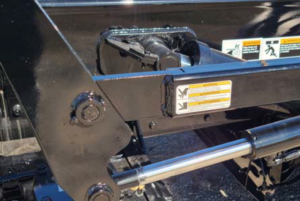
The Magnum-XD tarp system uses a true elbow arm design, not a telescoping arm that’s used on a rack and pinion tarper.
That design changes everything.
- Arms continue to operate even when dented or slightly bent (ours will work even bent or damaged)
- Greater adjustability across container sizes
- Maintains tarp position near the top of the load, even in wind
- Can be operated in a low-ceiling environment
Rack and pinion systems rely on telescoping sections that must stay greased & aligned. Once damaged, they bind up, don’t operate in unison, or stop working completely. Result:
- Magnum keeps operating
- Rack and pinion style systems are more problematic
Downtime Is Where the Difference Gets Expensive
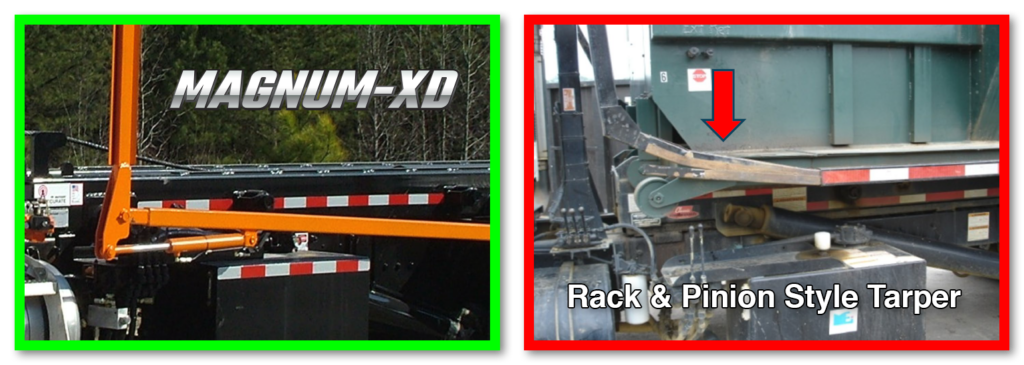
With Magnum-XD:
- Arms still function even if damaged
- Drivers keep running routes
- No need to stop and hand tarp while waiting for replacement parts
With a rack and pinion style tarper:
- Telescoping arms will not operate if damaged
- Drivers must hand tarp while waiting for repairs
That creates:
- Lost time per stop
- Increased labor
- Safety risks for drivers
Magnum-XD removes that scenario entirely.
Built to Avoid Damage in the First Place
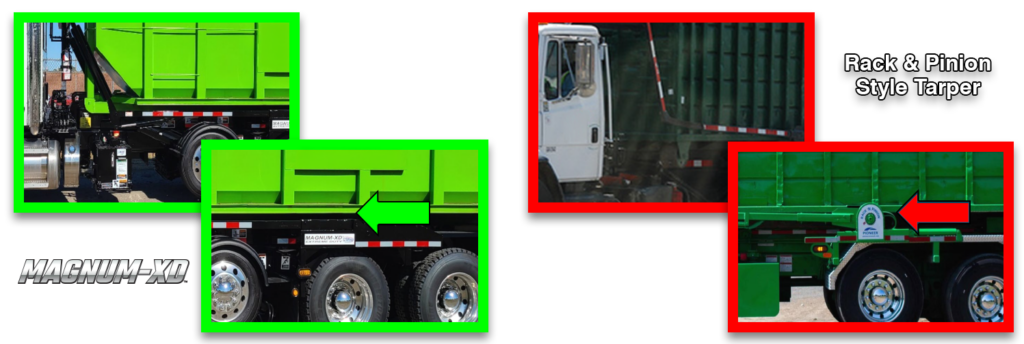
Magnum-XD’s layout is designed to stay out of the way during loading.
- Pivot point and lower arms sit below the container floor
- Reduces contact with containers and compactors
- Minimizes damage during loading cycles
Rack and pinion style systems place components in the path of the container:
- Higher exposure to impact
- Increased risk of bending or failure
Magnum-XD reduces both frequency and severity of damage.
Hydraulic Simplicity That Eliminates Failure Points
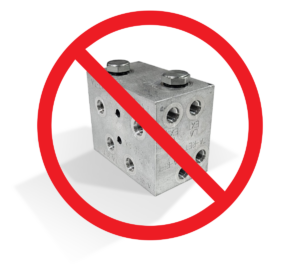 Magnum-XD uses matched displacement lift cylinders, which removes the need for divider/combiner valves.
That matters because:
- Fewer components to fail
- No synchronization issues caused by valve imbalance
- Cleaner, more predictable operation
- Arms operate together, tarps last longer
Rack and pinion style systems introduce:
- Mechanical complexity
- More components exposed to wear
- Greater likelihood of system imbalance
- Arms out of sequence, tarps wear out quicker
Longer Seal Life and Cleaner Operation
Cylinder performance is often overlooked, but it drives long-term cost.
Magnum-XD minimizes seal wear because all of our cylinders are Made in the USA using premium domestic seals, nothing imported.
That leads to:
- Longer seal life
- Reduced oil leakage
- Cleaner truck appearance
Telescoping arm systems can introduce side loading of the seals when the arms are bent, which causes the seals to fail faster. Some of these systems also use imported cylinders which are notorious for leaking and creates maintenance issues.
Designed for Real-World Containers
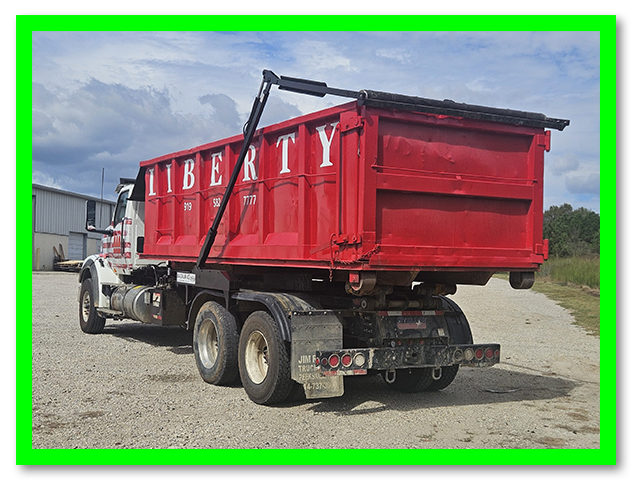
Magnum-XD is built to handle variations in container conditions.
- Covers a wider range of box sizes
- Works with oversized or “pregnant” containers
- Includes container deflectors to push arms clear of compactor hinges and oversized bins
Rack and pinion systems are less forgiving:
- Limited tolerance for irregular containers
- Increased risk of interference and damage
- Higher chance of arm damage
Greaseless Operation Reduces Maintenance
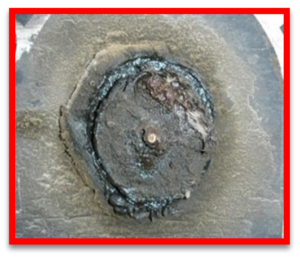
Magnum removes a common maintenance task.
- No weekly or monthly greasing required
- Simply remove and replace the bushings every 2-3 years
- Fewer service intervals
- Lower labor costs over time
Rack and pinion systems typically require:
- Routine lubrication
- More frequent maintenance checks
- Over or under greasing??
- Grit attracting grease slung all over your truck
Operator-Controlled Synchronization
Magnum allows the operator to control arm synchronization through the hydraulic system.
- No need for manual bleeding, fully retract your lower arms and hold until arms are together
- No mechanic intervention required
- Faster return to service
This reduces:
- Shop time
- Maintenance scheduling delays
- Arm damage from operating out of sequence
Protection from Road Debris

Magnum-XD’s pivot assembly is designed similar to a front-end loader arm linkage.
- Impervious to road debris, rocks, and garbage
- More durable in harsh environments
- Just keeps working, regardless of what’s thrown at it
Rack and pinion systems rely on exposed gear components:
- Susceptible to jamming
- Vulnerable to debris and contamination
Lower Cost of Ownership Over Time
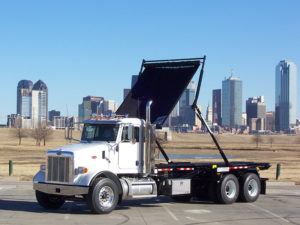
When you combine all factors:
- Less downtime
- Fewer repairs
- Reduced maintenance
- Longer component life
Magnum-XD consistently delivers a lower total cost of ownership.
Rack and pinion style systems may appear comparable upfront, but costs increase through:
- Downtime
- Labor
- Parts replacement
- Maintenance frequency
The Bottom Line
Both systems can cover a load. Only one is built to keep working when conditions are not perfect.
Magnum-XD gives you:
- Continued operation under damage
- Reduced downtime
- Lower maintenance requirements
- Better protection against real-world jobsite conditions
If your operation depends on uptime, the difference is clear.
